Global Attention Builds as EU Review Intensifies
What was initially expected by European regulators to be a relatively routine classification process has rapidly escalated into a significant international issue.
The review of tea tree oil by the European Chemicals Agency (ECHA) has moved well beyond a technical exercise and is now engaging governments, industry bodies, scientific experts and commercial stakeholders from around the world.
In Australia, the importance of this issue has risen sharply.
It has reached the point where:
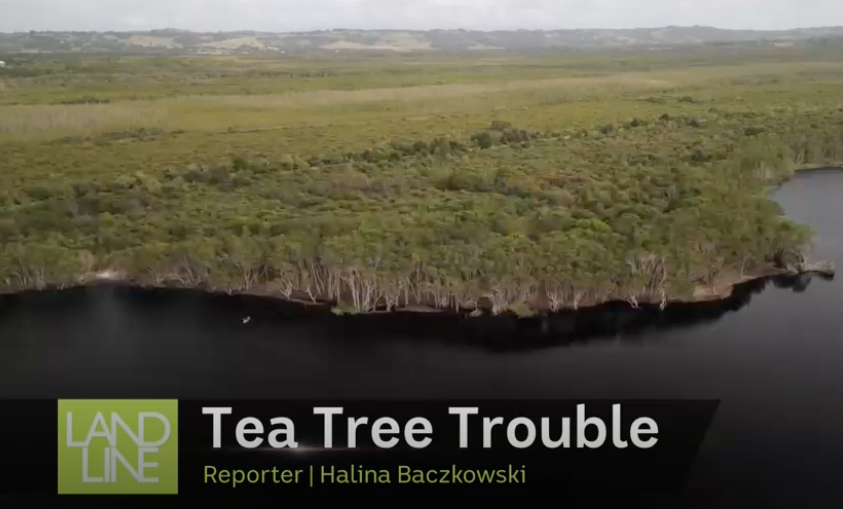
The national broadcaster, Australian Broadcasting Corporation (ABC), has featured the issue on its flagship rural affairs program, Landline (link below at the end of this article)
The Minister for Agriculture, Fisheries and Forestry, Julie Collins, has personally written to the European Commission
For an industry that often operates outside the public spotlight, this level of attention reflects the scale of what is now unfolding.
It is important to clarify that tea tree oil has not been reclassified in Europe at this stage. The matter remains under review.
The core issue
This is about how tea tree oil is currently being assessed.
Tea tree oil has a long history and significant body of evidence demonstrating safe and effective real-world use which is why it is widely incorporated into myriad everyday products.
However, there are concerns that the assessment approach does not adequately reflect how the substance is used in practice.
In particular, the application of a hazard-based framework can, in some cases, create a disconnect between potential effects observed under extreme conditions and how products are encountered in everyday settings.
At its core, this is about ensuring that regulatory decisions are based on:
Realistic application
Appropriate exposure
A clear distinction between hazard and practical risk
A globally successful industry facing new challenges
Tea tree oil is one of the most widely used essential oils in the world and the Australian tea tree oil industry is a global success story.
Over decades, growers, distillers and manufacturers have built a strong international market for a unique natural product. Today, around 90% of production is exported, supporting regional jobs, communities and long-term agricultural investment.
Like many internationally traded natural ingredients, Tea Tree Oil is now being forced to navigate a regulatory process that isn’t calibrated for the industry.
It’s a classic square peg in a round hole scenario.
Regulatory developments in Europe
The current review in the European Union has been triggered by data generated under extreme laboratory conditions that differ significantly from typical consumer use settings.
These studies involve exposure scenarios that are not representative of normal application, yet are being considered within a hazard-based framework that does not always distinguish between theoretical hazard and practical risk.
Under this type of approach, substances that are considered safe when applied appropriately may still raise concerns when assessed under certain conditions.
Taken to its logical conclusion, even something as essential as water could produce adverse effects under such circumstances. If a person were force-fed excessive amounts of water in a controlled setting, harmful effects would occur and trigger a re-classification process.
Clearly this would be flawed as no agency would move to regulate water as a consumer hazard.
The same principle applies for Tea Tree Oil.
This raises important questions about whether the current approach provides a fair and realistic basis for regulatory decisions.
It is also important to note that the process is still ongoing. Tea tree oil has not been reclassified at this stage and there remains an opportunity to ensure that the assessment reflects practical conditions.
Why this matters globally
While the current review focuses on tea tree oil, the implications extend far beyond a single ingredient.
This is increasingly being seen as a precedent-setting moment.
This approach has the potential to trigger similar reviews across a wide range of natural products, including:
Essential oils
Botanicals
Natural therapies
There are already early signs of this occurring, with other essential oils, including spearmint, being considered for assessment.
What is being tested with tea tree oil today could shape how other natural ingredients are assessed tomorrow.
If this continues, the impact could be significant:
Products people rely on may become unavailable
Consumer choice may be reduced
Natural options may be replaced with synthetic alternatives
Given the influence of European regulatory decisions, the effects are unlikely to be limited to one region.
The importance of national attention
Coverage by programs such as ABC Landline plays an important role in bringing these issues into the public domain.
It helps ensure that:
The broader economic and regional impacts are understood
Industry perspectives are heard beyond technical forums
There is greater awareness of what is at stake
For many Australians, this is the first time they are becoming aware of the issue.
ATTIA response
ATTIA is leading a coordinated industry response to these developments, working closely with scientific experts, international stakeholders and government.
ATTIA President Dave Martin said the current situation highlights the importance of ensuring that regulatory decisions are grounded in practical evidence.
“This is an important moment for the tea tree oil industry. We have built a globally respected export sector over many years and it is essential that regulatory decisions reflect how these products are used in the real world, as well as their long history of safe use.”
The response is focused on ensuring that assessment approaches properly reflect how substances are encountered in practice, including:
Use patterns and exposure
Scientific and technical analysis
Alignment between hazard identification and practical risk
ATTIA is actively supporting:
Scientific engagement to address key questions
Ongoing dialogue with regulators
Coordination across industry and international partners
“There is a strong commitment across the industry to work constructively with regulators and ensure that outcomes are informed, proportionate and based on sound science” Martin said.
The role of government
As highlighted in national coverage, the tea tree oil industry supports regional communities, export markets and a wide range of downstream applications.
The Minister for Agriculture, Julie Collins, has already taken steps to raise these issues.
With a Free Trade Agreement now in place between Australia and the European Union, it is essential that Australian industries are able to maintain fair and reasonable access to international markets.
In this context, the industry now needs the active support of the Minister for Trade, Don Farrell, particularly in relation to the Technical Barriers to Trade (TBT) process currently lodged with the World Trade Organization (WTO).
Engagement at this level will be critical to ensure that the industry’s position is effectively represented and that outcomes are informed, proportionate and consistent with international trade obligations.
What you can do
If you are involved in, or rely on tea tree oil, there are simple ways to stay engaged:
Watch and share the Landline segment
Raise awareness within your networks
Contact your state and federal representatives, as well as the Ministers for Trade and Agriculture, Fisheries and Forestry
Stay informed as the situation develops
Watch the Landline segment
For those wanting to see how this issue is being reported nationally, you can view the full ABC Landline segment here.
Looking ahead
What began as a technical regulatory process has become a matter of global importance.
It is not just about one ingredient.
It is about how products are assessed, how decisions are made and whether those decisions reflect how they are encountered in practice.
The outcome of this process will shape access to natural products for years to come
If you are part of the industry, or have an interest in the future of natural products, and would like to be involved in supporting this work, ATTIA welcomes engagement from organisations and individuals who want to contribute to a coordinated response.
To find out more or get involved, please contact ATTIA: