
Tea Tree Oil and Hormonal Disruption: Why the Misinformation Persists
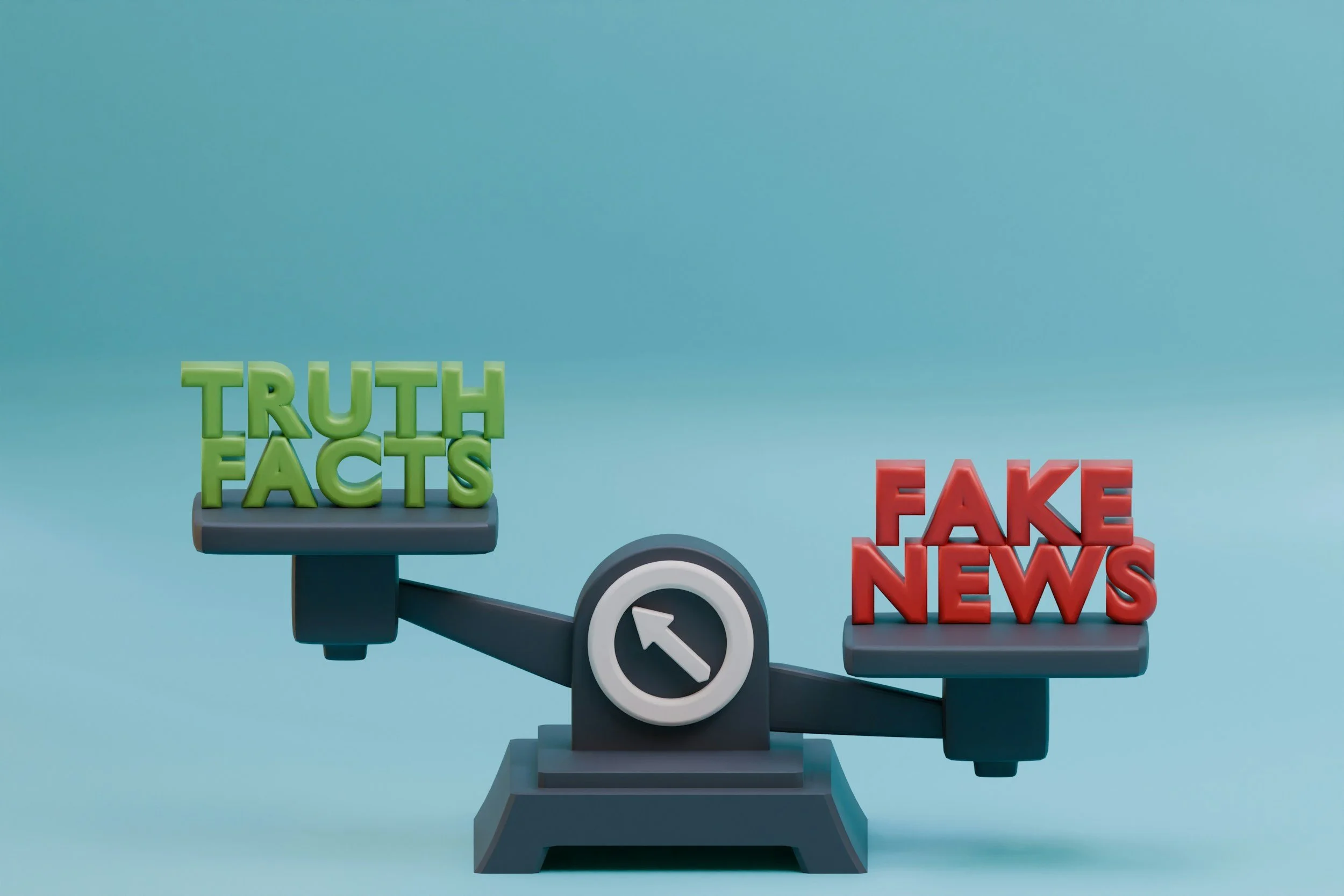
Almost 20 years after an initial scientific publication raised questions about Tea Tree Oil and hormonal disruption in children, the suggested association continues to circulate online, despite subsequent human research finding no evidence to substantiate it.
Tea Tree Oil is one of Australia’s most recognised natural ingredients, used in personal care, skincare and other consumer products around the world.
Yet a misconception that emerged nearly two decades ago continues to appear in online articles, social media and other sources: that Tea Tree Oil exposure causes hormonal disruption and abnormal breast development in children.
The original suggestion attracted considerable attention. What has received far less attention is the subsequent scientific research investigating whether the proposed association actually exists.
That research has found no evidence of a relationship between Tea Tree Oil exposure and endocrine disorders in children.
How did the misconception begin?
The concern originated in 2007, when a publication in the New England Journal of Medicine suggested a possible association between lavender and Tea Tree Oil exposure and abnormal breast development in children.
The publication described three clinical observations alongside laboratory experiments investigating potential hormonal activity.
However, the clinical evidence was extremely limited. Of the three children described, only one had reportedly used a product containing Tea Tree Oil, alongside exposure to lavender.
Subsequent scientific scrutiny also raised questions about the laboratory methodology, including the possibility that essential oils could interact with plastic laboratory equipment and influence experimental results.
While laboratory experiments can provide valuable information about potential biological activity, they do not, on their own, establish that an ingredient causes adverse hormonal effects in humans.
The original publication therefore did not establish that Tea Tree Oil caused endocrine disorders in children.
Nevertheless, the suggested association attracted widespread attention and continues to be repeated, often without reference to the research published since.
What does the subsequent scientific research show?
In 2020, a systematic review published in Complementary Therapies in Medicine examined the available scientific literature investigating the proposed relationship between lavender and Tea Tree Oil exposure and endocrine disorders in children.
The review found that the available clinical evidence did not substantiate a causal relationship.
This was followed in 2022 by an epidemiological study published in the International Journal of Pediatrics and Adolescent Medicine.
The study examined 556 children and found no evidence of a statistically significant association between exposure to lavender or Tea Tree essential oils and endocrine disorders.
The researchers concluded:
“This study finds no evidence of a relationship between the use of lavender or tea tree essential oils and endocrine disruption in children.”
The research formed part of a broader scientific investigation supported by the Australian Tea Tree industry through the AgriFutures Tea Tree Oil Program.
Rather than dismissing the original concerns, the industry supported further scientific investigation to determine whether the proposed association was supported by human evidence.
These findings provide important evidence that does not support the original suggestion of a relationship between Tea Tree Oil exposure and endocrine disorders in children.
Why does the misinformation persist?
Scientific understanding evolves as new evidence becomes available.
An early observation may raise an important question, but it should not be treated as an established scientific conclusion without supporting evidence.
Unfortunately, information published online does not always evolve alongside scientific understanding.
As recently as April 2026, media coverage of essential oils continued to suggest a link between Tea Tree Oil, endocrine-disrupting activity and abnormal breast development in children, without acknowledging the subsequent human research that failed to substantiate the proposed association.
This illustrates how an early scientific suggestion can continue to influence public perceptions nearly two decades later.
The challenge extends beyond individual articles. Search engines, news aggregation services and increasingly AI-generated responses can continue to surface or repeat outdated information, particularly when earlier claims remain widely referenced online.
Over time, repetition can give an unsubstantiated association the appearance of an established fact.
The distinction is important: the original research raised a question about Tea Tree Oil and hormonal disorders in children. Subsequent human research has not substantiated that association.
This highlights the responsibility of those publishing and sharing scientific information to ensure that it accurately reflects the available evidence.
Research should not be selectively referenced to support an outdated narrative, particularly when subsequent studies have provided a more comprehensive understanding of the issue.
For consumers, manufacturers and businesses using Tea Tree Oil, the difference between an early scientific hypothesis and a conclusion supported by subsequent research matters.
Trust the science, not the misinformation
With so much information available online, distinguishing credible scientific evidence from outdated claims and misconceptions can be challenging.
ATTIA Ltd, representing the Australian Tea Tree Industry, is committed to providing credible, evidence-based information about Tea Tree Oil, drawing on decades of scientific research into its properties, applications and safety.
The research examining Tea Tree Oil exposure and endocrine disorders in children demonstrates why this matters.
Scientific understanding should be informed by the available evidence, not by misconceptions that continue to circulate long after the research has moved forward.
For a more detailed explanation of the research, read ATTIA’s earlier article, Scientists Confirm Essential Oils Unrelated to Hormone Disruption.
Scientific references
Henley et al. (2007)
Prepubertal Gynecomastia Linked to Lavender and Tea Tree Oils.
New England Journal of Medicine, 356, 479–485.
https://doi.org/10.1056/NEJMoa064725
Carson, Tisserand & Larkman (2014)
Lack of Evidence That Essential Oils Affect Puberty.
Reproductive Toxicology, 44, 50–51.
https://doi.org/10.1016/j.reprotox.2013.09.010
Ramsey et al. (2019)
Lavender Products Associated With Premature Thelarche and Prepubertal Gynecomastia: Case Reports and Endocrine-Disrupting Chemical Activities.
Journal of Clinical Endocrinology & Metabolism, 104(11), 5393–5405.
https://doi.org/10.1210/jc.2018-01880
Hawkins et al. (2020)
The Relationship Between Lavender and Tea Tree Essential Oils and Pediatric Endocrine Disorders: A Systematic Review of the Literature.
Complementary Therapies in Medicine, 49, 102288.
https://doi.org/10.1016/j.ctim.2019.102288
Hawkins et al. (2022)
Prevalence of Endocrine Disorders Among Children Exposed to Lavender Essential Oil and Tea Tree Essential Oils.
International Journal of Pediatrics and Adolescent Medicine, 9(2), 117–124.
https://pmc.ncbi.nlm.nih.gov/articles/PMC9152575/
Additional information:
AgriFutures Australia: Tea Tree Oil Safe Ingredient for Personal Care Products